
Welcome to the Brookfield Animal Hospital Blog! We are excited to share veterinary community news and pet care information with you. We are committed to client education because we believe that an informed pet owner is a better pet owner, and we encourage all of our clients to keep up-to-date on the information that we share here in our blog.
Tuesday, November 30, 2010

Tuesday, November 23, 2010
Missing a turkey wing?
Missing a turkey wing? To make sure your dinner doesn't fly away, we want to remind you to have plenty of food and treats for your four legged friend on Thanksgiving. Remind your guest to please "do not" feed the pets. Those tasty turkey bones can splinter and perforate the stomach and other major organs. Ingesting a bone is a common holiday hazard. Cooked poultry bones may seem like the perfect gift for your pet, but do him a favor and save them for the soup. Even large cooked bones are prone to splintering, which can pierce through the animal's intestines. Keep pet's safe this Thanksgiving holiday.
Friday, November 19, 2010
Thursday, November 18, 2010
Pets in Pain
We are often asked about managing pain in our pets, including chronic pain such as that caused by arthritis or acute pain that is caused by injury or surgery. In the last few decades, veterinary medicine has made great strides in recognizing pain in animals and learning ways to better alleviate pain. We now understand that we can achieve better pain control by using a combination of drugs that block pain receptors differently. In addition, when giving these medications prior to a painful event (ie. surgery), we need less drugs to keep the pet comfortable.
At Brookfield Animal Hospital, we have fully embraced this preemptive, multimodality approach to pain management and we tailor our protocols to each individual patient’s needs. Even routine surgeries such as spays and neuters receive three medications prior to surgery and are maintained on three to four medications after surgery for optimal pain control. These medications include anti-inflammatories, narcotics, and other analgesics. We also use local nerve blocks when appropriate.
We regularly evaluate our pain management protocols for new drug combinations that can keep our patients more comfortable after injury or surgery. In our next newsletter, we will discuss the signs and symptoms of chronic pain and how we can keep those pets in chronic pain as comfortable as possible.
It is often hard to tell that an animal is feeling pain. Pets do not show pain in the same ways that people do. A pet in chronic pain rarely vocalizes (cries/whines). Instead, these pets may eat less, interact less with people or hide (especially cats), limp, walk stiffly or have difficulty getting up or jumping up. There are a variety of reasons a pet may have chronic pain. Arthritis is the most common cause of chronic pain and can be crippling in both animal and people. Other causes include cancer and dental pain.
In some cases, addressing the underlying cause can cure the problem, i.e. fix the painful tooth. With most causes of chronic pain, a cure is not possible, but alleviating the pain and keeping the pet comfortable is often achievable with medication. Glucasamine supplements such as Dasuquin and Adequan injections can help improve joint health and therefore decrease discomfort. Nonsteroidal anti-inflammatory medications such as Rimadyl, Deramaxx and Metacam and steroids often significantly decrease pain.
When anti-inflammatories are not enough, adding analgesic drugs such as Gabapentin, Tramadol and narcotics will often keep a pet comfortable. In addition, laser therapy can significantly decrease pain and inflammation. Unfortunately, some animals do experience chronic pain; the good news is that, for many, we can keep them comfortable and happy.
Tuesday, November 16, 2010
Celebrating the holidays at your house this year?
We want to remind you to keep an eye on the foods your pet eats during this time. Some foods like chocolate or onions can be toxic to your pet, while other fatty foods such as meats and cheeses can cause pancreatitis, a painful GI condition that often requires hospitalization. To keep your pet safe and healthy, keep hard to resist items out of reach and feed only foods and treats made specifically for him or her. Just a fall reminder from the staff at Brookfield Animal Hospital.
Friday, November 12, 2010
Wednesday, November 10, 2010
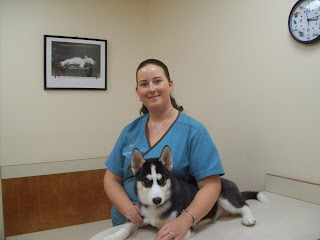
Employee of the Month
Brookfield Animal Hospital would like to honor Michelle Cornelison, a technician, as our Employee of the Month. She has been with us for five years and is currently taking courses through Cedar Valley College to obtain her associates degree in Veterinary Technology, which is an AAHA accredited program. We thank her for all her contributions to our practice.

Subscribe to:
Posts (Atom)